BEIJING - Heads of state or government leaders from more than 40 African countries have confirmed their attendance at the upcoming Beijing Summit of the Forum on China-Africa Cooperation (FOCAC).
Zhai Jun, China's assistant foreign minister, said at a press conference on Thursday that 1,700 delegates will attend the summit, scheduled for November 3-5.
Representatives from more than 20 organizations of the United Nations and African regional organizations have also been invited.
More than 1,000 reporters, including about 300 from Africa, have applied to cover the upcoming event.
The summit, which doubles as the FOCAC's 3rd ministerial conference, will focus on "friendship, peace, cooperation and development".
FOCAC is a mechanism for collective dialogue and cooperation jointly established by China and Africa to cope with new challenges and facilitate common development.
Since the launch of the FOCAC in 2000, two ministerial conferences have been held in Beijing and Addis Ababa.
Beijing Trip Guide

Tuesday, October 31, 2006


Tuesday, October 24, 2006
Weather in beijing changes fast these days
The city starting from October 6 dramatic turning point in the night, more rain and temperatures fell. According to meteorological observations, the city following on the 6th evening rain, the city's rainfall again on the 8th. 3-5 mm of rainfall in most areas, the highest daytime temperature in 8 to 20 ° C below. on the 8th of which the most cool and the observatory southeast of the maximum temperature 15.9 ° C, on the 4th of 31 ° C with a tremendous contrast.
Moreover visibility is not very good in the city in recent days.
Especially the southeastern region after the morning fog often overshadowed by the best of Hebei Province, central and southern areas of fog. relatively long duration, many of which resulted in Shijiazhuang, Beijing and Tianjin, a number of other highway road closures Jingshen, Traffic on the road to the region a greater impact.
Local experts analyzed that this rainfall after two weak northerly winds, and soon to southerly winds. This will enable the city and the low altitude areas in central and southern Hebei has not reduced soon. Instead southerly wind blowing in the upper reaches of the water vapor will be blown over. In addition, stable in the atmosphere above the recent low, the evaporation of surface water vapor in the lower atmosphere again stranded. These two factors have resulted in these areas relatively near surface air humidity, the result of foggy weather shield enclosures.
According to a recent analysis of the meteorological data, in the east Siberian region in a surge of cold air is, on the 12th is expected to begin affecting the city, the sky was cloudy and gradually increased, there will be light rain at night on the 13th to come. 3,4-level northerly winds blowing in the rain under the weather will soon turn, and the visibility improved. on the 14th will be a good day weather temperature, the maximum temperature up to 25 ℃.It is expected that good things never last, on the 15th of the sky on the 16th will be a rapid increase in cloud cover, temperatures dropped. visibility may have again deteriorated.
Li Wen / (senior engineer of the Beijing Municipal Meteorological Observatory professional)
Moreover visibility is not very good in the city in recent days.
Especially the southeastern region after the morning fog often overshadowed by the best of Hebei Province, central and southern areas of fog. relatively long duration, many of which resulted in Shijiazhuang, Beijing and Tianjin, a number of other highway road closures Jingshen, Traffic on the road to the region a greater impact.
Local experts analyzed that this rainfall after two weak northerly winds, and soon to southerly winds. This will enable the city and the low altitude areas in central and southern Hebei has not reduced soon. Instead southerly wind blowing in the upper reaches of the water vapor will be blown over. In addition, stable in the atmosphere above the recent low, the evaporation of surface water vapor in the lower atmosphere again stranded. These two factors have resulted in these areas relatively near surface air humidity, the result of foggy weather shield enclosures.
According to a recent analysis of the meteorological data, in the east Siberian region in a surge of cold air is, on the 12th is expected to begin affecting the city, the sky was cloudy and gradually increased, there will be light rain at night on the 13th to come. 3,4-level northerly winds blowing in the rain under the weather will soon turn, and the visibility improved. on the 14th will be a good day weather temperature, the maximum temperature up to 25 ℃.It is expected that good things never last, on the 15th of the sky on the 16th will be a rapid increase in cloud cover, temperatures dropped. visibility may have again deteriorated.
Li Wen / (senior engineer of the Beijing Municipal Meteorological Observatory professional)
Friday, October 20, 2006
Hutong near Forbidden City
Surviving pieces of old Peking are sprinkled across the capital like little ancient islands amidst a rising tide of urban modernity. These precious parts of the past, the alleyway environment and its way of life still abound, but at increasingly scattered locations, forming a hutong archipelago in the forgotten city.
October is widely regarded as the best time of year here with a comfortable climate and the longest continuous streak of blue-sky days in a month. The first week during National Day holiday is especially fine as Beijing gets a breather with lighter traffic and most construction workers hanging up their hardhats and taking a break.
If you’re staying put for the National Day celebrations, it’s a good opportunity to go exploring around the “Golden Treasure” islands for a genuine narrow byway experience that’ll broaden your horizons. It takes most of a day to systematically meander by foot, or half a day to investigate by bike.
The island chain effect was formed over the last few years by the creation of Jinbao Jie, or Golden Treasure Street. A flood of concrete for construction projects created this new division between the Jianguomen and Chaoyangmen neighborhoods. Jinbao combines the gold from Goldfish Lane (Jinyu Hutong) on its western end and the treasure from Dayabao Hutong (Big Elegant Treasure Alley).
These sub-districts are worth visiting, both as evidence of historical erosion and to see the remains of a hardy human ecosystem dating back to the Yuan dynasty. The area is bounded by Jianguomennei Dajie on the south and Chaoyangmennei Dajie on the north. The western border is formed by the busy shopping streets of Dongdan Beidajie and Dongsi Nandajie, while the western side is defined as Chaoyangmen Nanxiaojie, an old thoroughfare freshly widened this century. There’s little to see east of Nanxiaojie to the Second Ring Road, bar a few one-stop islets like Zhihua Temple.
The wisest approach is to ride a bike through the southern islands of Golden Treasure Street, starting at Beijige Santiao, across the street from the northwest corner of the Oriental Plaza, then heading east. The first stop is a couple of meters into the alley, the remnants of a prince’s palace called the Ningjun Wangfu also known as Xieqin Wangfu. The palace belonged to the 13th son of the Qing Emperor Kangxi, who survived a bitter struggle for succession by not vying for the throne against his numerous male siblings. The winner, Yongzheng (r. 1723-1735), made his half brother a trusted advisor in charge of finance and water conservancy.
While it’s consistently difficult to get past the jealous palace gatekeepers for more than a harassed glimpse, the next stop, left then right around the corner, number 21, is easier to penetrate. Behind the colonnaded arched entryway is one of two secret gardens in the area, Western-style housing dormitories completed in 1921 for foreign doctors and nurses staffing the Peking Union Medical Hospital, or Xiehe. The other compound is on Waijiaobu Jie.
The old environment heading north from Beijige Santiao to Dongtangzi Hutong is eroding fast. Large chunks of the courtyard housing are already gone and the remainder is a reminder (like this picture of Xinkai Lu) of the future, not the past. On Xizongbu Hutong there is a sign noting the memorial temple of late Qing statesman Li Hongzhang (1823-1901) and a fragment of the vermilion wall that once encased it.
Aside from the doctors’ dorm on Waijiaobu Jie (Foreign Affairs Street), the other noteworthy edifice is the reception hall entrance of the foreign ministry built in 1909. It also served as the first Foreign Ministry of the PRC between 1949 and 1966. There is no marker for the original foreign ministry established during the Qing dynasty, located on Dongtangzi Hutong. On the west end of that alley was the residence of the noted educator Cai Yuanpei (1868-1948).
The hutong environment is much better on the island north of Jinbao Jie. It’s great for pictures and mixing with residents. Start east to west on Ganmian Hutong, crisscross northward to Shijia Hutong (once the home of Mao’s successor Hua Guofeng and now the Haoyuan Guesthouse), followed by Neiwubu Jie (Interior Ministry Street). Be sure to check out the courtyard just inside the northeast corner.
You can only go west to east on Bence and Dengce Hutongs as they merge with other paths: Bence takes you to Yanyue Hutong (Practice Music Alley); Dengce drops you on to Lishi Hutong (Ceremonious Official Lane). Both are great. Unfortunately the stunning residence on Lishi, which once served as the Indonesian Embassy, is not open to the public. The north island of the Golden Treasure chain ends with Qianchaomian Hutong, and then you’re back in today’s Beijing. Ed Lanfranco
October is widely regarded as the best time of year here with a comfortable climate and the longest continuous streak of blue-sky days in a month. The first week during National Day holiday is especially fine as Beijing gets a breather with lighter traffic and most construction workers hanging up their hardhats and taking a break.
If you’re staying put for the National Day celebrations, it’s a good opportunity to go exploring around the “Golden Treasure” islands for a genuine narrow byway experience that’ll broaden your horizons. It takes most of a day to systematically meander by foot, or half a day to investigate by bike.
The island chain effect was formed over the last few years by the creation of Jinbao Jie, or Golden Treasure Street. A flood of concrete for construction projects created this new division between the Jianguomen and Chaoyangmen neighborhoods. Jinbao combines the gold from Goldfish Lane (Jinyu Hutong) on its western end and the treasure from Dayabao Hutong (Big Elegant Treasure Alley).
These sub-districts are worth visiting, both as evidence of historical erosion and to see the remains of a hardy human ecosystem dating back to the Yuan dynasty. The area is bounded by Jianguomennei Dajie on the south and Chaoyangmennei Dajie on the north. The western border is formed by the busy shopping streets of Dongdan Beidajie and Dongsi Nandajie, while the western side is defined as Chaoyangmen Nanxiaojie, an old thoroughfare freshly widened this century. There’s little to see east of Nanxiaojie to the Second Ring Road, bar a few one-stop islets like Zhihua Temple.
The wisest approach is to ride a bike through the southern islands of Golden Treasure Street, starting at Beijige Santiao, across the street from the northwest corner of the Oriental Plaza, then heading east. The first stop is a couple of meters into the alley, the remnants of a prince’s palace called the Ningjun Wangfu also known as Xieqin Wangfu. The palace belonged to the 13th son of the Qing Emperor Kangxi, who survived a bitter struggle for succession by not vying for the throne against his numerous male siblings. The winner, Yongzheng (r. 1723-1735), made his half brother a trusted advisor in charge of finance and water conservancy.
While it’s consistently difficult to get past the jealous palace gatekeepers for more than a harassed glimpse, the next stop, left then right around the corner, number 21, is easier to penetrate. Behind the colonnaded arched entryway is one of two secret gardens in the area, Western-style housing dormitories completed in 1921 for foreign doctors and nurses staffing the Peking Union Medical Hospital, or Xiehe. The other compound is on Waijiaobu Jie.
The old environment heading north from Beijige Santiao to Dongtangzi Hutong is eroding fast. Large chunks of the courtyard housing are already gone and the remainder is a reminder (like this picture of Xinkai Lu) of the future, not the past. On Xizongbu Hutong there is a sign noting the memorial temple of late Qing statesman Li Hongzhang (1823-1901) and a fragment of the vermilion wall that once encased it.
Aside from the doctors’ dorm on Waijiaobu Jie (Foreign Affairs Street), the other noteworthy edifice is the reception hall entrance of the foreign ministry built in 1909. It also served as the first Foreign Ministry of the PRC between 1949 and 1966. There is no marker for the original foreign ministry established during the Qing dynasty, located on Dongtangzi Hutong. On the west end of that alley was the residence of the noted educator Cai Yuanpei (1868-1948).
The hutong environment is much better on the island north of Jinbao Jie. It’s great for pictures and mixing with residents. Start east to west on Ganmian Hutong, crisscross northward to Shijia Hutong (once the home of Mao’s successor Hua Guofeng and now the Haoyuan Guesthouse), followed by Neiwubu Jie (Interior Ministry Street). Be sure to check out the courtyard just inside the northeast corner.
You can only go west to east on Bence and Dengce Hutongs as they merge with other paths: Bence takes you to Yanyue Hutong (Practice Music Alley); Dengce drops you on to Lishi Hutong (Ceremonious Official Lane). Both are great. Unfortunately the stunning residence on Lishi, which once served as the Indonesian Embassy, is not open to the public. The north island of the Golden Treasure chain ends with Qianchaomian Hutong, and then you’re back in today’s Beijing. Ed Lanfranco
Thursday, October 19, 2006
Chinese Hamlet and the Half-Blood Prince(zz)

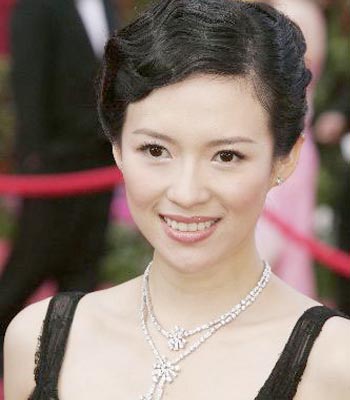
"Interracial couples have the most beautiful babies.” As conventional wisdom, this may not be entirely true, but stars like Michele Reis, Christy Cheung, and Takeshi Kaneshiro – known as hunxue in Chinese – make a convincing case.
What about Daniel Wu? In a recent issue of Sanlian Life Week, Meng Jing pointed to a mixed Chinese-Western heritage in an attempt to explain Wu’s failure to graduate from supporting roles, like his turn as a prince in this season’s The Banquet:
Strictly following Shakespeare’s original, Wu’s prince would be a standard leading role, if only the director had not changed the play. But of course the director changed the play. Were the role played by Tony Leung then maybe it would have retained its original dimensions, but few directors are comfortable with having Daniel Wu support the entire thing. Wu’s been in the business for a while. Every year he’s the top “women’s sex fantasy partner.” He’s not been short of opportunities, either, but those opportunities weren’t enough to let him take off his “pretty-boy” hat. Why can’t an actor who has opportunity, looks, and strength make it to the next level? The reason: he is mixed-race and grew up in San Francisco.
Unfortunately for this theory, Daniel Wu was born in the US in 1974, and his parents are both from Shanghai. Meng continues:
There are lots of actors who have returned from overseas whose status as ABCs doesn’t prevent them from succeeding; instead, it acts as a sort of talent reservoir – they are more open, more skilled at language than mainland actors. But those actors aren’t mixed-race; most of them are bananas: yellow shells around white cores. Lee-Hom and Coco Lee are both successful examples – they grew up outside the country, but their faces are still Chinese. Or Christy Chung – she’s a mix of Asian blood. Chinese, Vietnamese, and Japanese are all okay, but once you leave the realm of the yellow race, you’ve got problems.
Meng may have a point when she suggests that many ABCs, returned expats, and mixed-race Asian celebrities share some “foreign” quality that distances them from domestic audiences. And though Wu may be ethnically Chinese, there’s something about him that leads fans, from online forum commenters to a well-known gossip columnist, to identify him as hunxue.
Taken in this way, hunxue may be more of a behavioral and aesthetic concept than a genealogical identity. Despite their mixed Sino-European ancestry, superstars like Karen Mok and Cecilia Cheung are rarely thought of as “foreign” in the way that Meng has pegged Daniel Wu. So with a bloodtest unreliable, the fate of new stars remains uncertain: will Isabella Leong, the Sino-Portuguese breakout star of this spring’s Isabella follow in their footsteps, or will she be trapped in the just-a-pretty-face ghetto with Wu and other cultural hunxue celebrities? Joel Martinsen
Wednesday, October 18, 2006
Xiushui market (zz)

14 Dongdaqiao Lu, 200 meters north of the Guiyou Shopping Center, Chaoyang District (6501 8811)
Xiushui is gradually turning itself into a brand. Just one year after the opening of the five-floor Xiushui building, here comes its sister, Xiushui 2. But this new market is not simply another hub for endless copies of world-renowned labels. Though you can still spot some “designer” items, most of the things on sale are chic dresses, sandals, blazers, shorts and accessories that are in tune with current trends and are hard to find in other markets. Sadly, there’s not much for the guys, except some jeans. The four-floor building has more than fifty fancily decorated boutiques (including the nail salons on the third floor), which is one reason why prices here are much higher than at Xiushui 1. Since most stores have only just opened and some are still under decoration, there’s a bit of a chemical whiff about the place. The V Shop on the fourth floor sells low-waist jeans for men and women, starting at around a hundred kuai. No. 222 boutique on the second floor features sequined leopard-print sandals (RMB 150) and Miu Miu white blazers (RMB 200) and No. 239 provides custom-made wedding gown services. Belle Zhao
Shopping in Beijing
People who visit China are curious about where to go shopping.
As many shops referred in tour guide books, there are some very famous business streets full of all kinds of tourist shops, and others are like silk market and yaxiu market.
What I am going to tell you will be more than that:
Where to go shopping depends on what kind of stuffs you would like to buy?
we can simply divide into 3 categries:
1. Chinese feature like jade, silk, cloisonne,and other handcrafts, at the same time taste culture, get something that is real.
If you want to buy something in this list, you may need to read the book and esp follow your local guide suggestions, they will give you good advice where to get them.
because these stuffs you couldn't find in every shop, they are in tourist shops.
2. Buy Modern stuffs like brand clothes, cosmetics..
Actually if you want to buy these things, it is just like you go shopping in USA or Europe, there are many large mall in Beijing, most of them sold there, while the price maybe almost the same as you buy in your contry.sellers there can't speak English for most of them.
3. buy Chinese special things or some fake brand clothes, enjoy the bargin pleasure.
If you want to experience this, the best place for you should be like silk market and yaxiu, they are also tourist places, what make difference is that they have all kind of shoppings, many choices, sellers there can speak more than 2 languages. some people enjoy the fun of bargin.
As many shops referred in tour guide books, there are some very famous business streets full of all kinds of tourist shops, and others are like silk market and yaxiu market.
What I am going to tell you will be more than that:
Where to go shopping depends on what kind of stuffs you would like to buy?
we can simply divide into 3 categries:
1. Chinese feature like jade, silk, cloisonne,and other handcrafts, at the same time taste culture, get something that is real.
If you want to buy something in this list, you may need to read the book and esp follow your local guide suggestions, they will give you good advice where to get them.
because these stuffs you couldn't find in every shop, they are in tourist shops.
2. Buy Modern stuffs like brand clothes, cosmetics..
Actually if you want to buy these things, it is just like you go shopping in USA or Europe, there are many large mall in Beijing, most of them sold there, while the price maybe almost the same as you buy in your contry.sellers there can't speak English for most of them.
3. buy Chinese special things or some fake brand clothes, enjoy the bargin pleasure.
If you want to experience this, the best place for you should be like silk market and yaxiu, they are also tourist places, what make difference is that they have all kind of shoppings, many choices, sellers there can speak more than 2 languages. some people enjoy the fun of bargin.
China Market Overview(zz)
China is a rapidly rising global economic power. Overall growth has averaged a robust 7% to 8% for more than a decade, with some markets expanding much more rapidly:
1. China's auto market exploded in 2003, passenger car sales jumping 82% year-over-year. Yet China's auto industry is still in early stages with strong growth projected for years ahead.
2. China is the world's largest telecommunications market with some 280 million mobile subscribers and 270 million wireline subscribers. New wireline subscribers are being connected at close to two million per month while mobile subscribers are growing at four million per month, overall at 14% growth rate.
3. Chinese household appliance manufacturers are experiencing growth in excess of 35% per year. The demand for China's household electric appliances, both domestic and for export, pushed production levels overall for many small and major appliance product categories up 40 to 50 percent or more in 2003.
4. At approximately 1.29 billion people, China is the world's most populous nation, yet Internet penetration and ecommerce are still in the developmental growth stages. According to statistics released by the China Internet Network Information Center, China, with nearly 80 million Internet users, currently trails only the USA and Japan. With the number of Internet users growing at around 5% a month, a household penetration rate of 25% percent is conceivably only three or four years off.
1. China's auto market exploded in 2003, passenger car sales jumping 82% year-over-year. Yet China's auto industry is still in early stages with strong growth projected for years ahead.
2. China is the world's largest telecommunications market with some 280 million mobile subscribers and 270 million wireline subscribers. New wireline subscribers are being connected at close to two million per month while mobile subscribers are growing at four million per month, overall at 14% growth rate.
3. Chinese household appliance manufacturers are experiencing growth in excess of 35% per year. The demand for China's household electric appliances, both domestic and for export, pushed production levels overall for many small and major appliance product categories up 40 to 50 percent or more in 2003.
4. At approximately 1.29 billion people, China is the world's most populous nation, yet Internet penetration and ecommerce are still in the developmental growth stages. According to statistics released by the China Internet Network Information Center, China, with nearly 80 million Internet users, currently trails only the USA and Japan. With the number of Internet users growing at around 5% a month, a household penetration rate of 25% percent is conceivably only three or four years off.
Sunday, October 15, 2006
travel tips
Work and Rest
The working week in China is from Monday through Friday. Most people do not work on Saturdays and Sundays. But people working in shops, super market, this kind of service field still work. So don't worry you can't go shoppinig on Saturday and Sunday.
Chinese Currency
Chinese currency is issued by the People's Bank of China.
The standard unit of Chinese currency is the Renminbi (RMB), also known as the yuan.The subsidiary units are the jiao and the fen. You can always change money in Hotel.
People are not used to using credit card in many places except resturants and shops. So prepare enough cash before you leave hotel.
When is the best time to visit China?
Deciding when to visit China depends on which places you wish to visit, what type of weather you enjoy, and how much a bargain you want. Remember that China is a huge country with many different climates and types of terrain. Think of it in terms of United States, which China resembles in size and shape. Traveling along the Golden Route (Beijing, Xian, Shanghai, Guilin) is like visiting Philadelphia, Knoxville, and Southern Florida all in one trip. May, September and October are the peak tourist months at China's most popular destinations when the weather is most comfortable. Prices drop a bit in the shoulder season, which runs from late March through April and from June through August. The offseason arrives in late November, and continues through the winter when crowds are few and prices lower.
The working week in China is from Monday through Friday. Most people do not work on Saturdays and Sundays. But people working in shops, super market, this kind of service field still work. So don't worry you can't go shoppinig on Saturday and Sunday.
Chinese Currency
Chinese currency is issued by the People's Bank of China.
The standard unit of Chinese currency is the Renminbi (RMB), also known as the yuan.The subsidiary units are the jiao and the fen. You can always change money in Hotel.
People are not used to using credit card in many places except resturants and shops. So prepare enough cash before you leave hotel.
When is the best time to visit China?
Deciding when to visit China depends on which places you wish to visit, what type of weather you enjoy, and how much a bargain you want. Remember that China is a huge country with many different climates and types of terrain. Think of it in terms of United States, which China resembles in size and shape. Traveling along the Golden Route (Beijing, Xian, Shanghai, Guilin) is like visiting Philadelphia, Knoxville, and Southern Florida all in one trip. May, September and October are the peak tourist months at China's most popular destinations when the weather is most comfortable. Prices drop a bit in the shoulder season, which runs from late March through April and from June through August. The offseason arrives in late November, and continues through the winter when crowds are few and prices lower.
How can I choose a suitable tour package?
When you scan the different information offered by different travel agencies, you will find some of them offer better service with higher pay, some of them offer only serveral service, while with low price. I'd like to remind you to look up the context of the tour package includes, pay attention to the traveling items specificly, otherwise, you may get unsatisfying package.for example, there are many places with the same name, Great Wall in Beijing there are five most famous, they have different feature, be sure to consult the agency first to know exactly which one you would like, of course they are at different price.
Beijing 2008 Olympic coins
| Beijing 2008 Olympic coins (1) "29th Olympiad commemorative coins" by the People's Bank of China in September 20, 2006 To a global issue. This Olympic commemorative coins issued by the 29th ordinary commemorative coins and precious metal commemorative coins, including two varieties. Ordinary commemorative coins (1) a set of two pieces; Precious metal commemorative coins (1) a set of six, one-third ounce gold coin, two, one ounce gold coin 4. Above all legal currency of the People's Republic of China. Ordinary commemorative coins features the same logo for the Beijing 2008 Olympic Games, Beijing 2008 Olympic Games main venue-overlooking the runway of the National Stadium and the picture. To be within the margin above the "People's Republic of China" name to be within the margin below "2008" decorated. One side pictorial mascot for the Beijing 2008 Olympic sport in the Fujian Children ages 2 mascot for the Beijing 2008 Olympic Games Swimming Fujian her designs, to be within the upper left corner geopolitical value "1 billion" word to be within the margin below "the 29th Olympic Games" words. The coin denominations of one million were 25 mm in diameter, materials are brass alloy, the issuance of 10 million pieces. The coins have the same functions with the existing renminbi, denominated in yuan and the same circulation. Precious metal commemorative coins (1) into the design of the rich Chinese national characteristics, the common features of the 29th Olympic Games emblem of the dragon designs and traditional Chinese form, and published the name, decorated with "2008." One-third ounce of gold coins (two pieces) to the back of one picture equestrian sports in ancient China and modeling the 29th Olympic sport-equestrian sports icon, second to the ancient Chinese exercise form and archery 29th Olympic sports - archery sports icon, and published "at the 29th Olympic Games" and the word denomination. 1 ounce silver coins (4 pieces) back one picture for children kite flying, Chinese knot and paper windmill, two children jumping goats, knot and AINSLIAEA lords 3 for children greens Medica, Chinese knot and Beas decoration four children kicking the shuttlecock, knot and cloth tiger, and published the "29th Olympiad words" and the denomination. Round-third ounce of gold coins (two pieces) of refined money, one-third ounce of pure gold with a diameter of 23 mm and a denomination of 150 yuan, a synthetic 99.99%, the biggest issue for 60,000 pieces. Round 1 ounce silver coins (four) as refined coins containing one ounce of silver, has a diameter of 40 mm and a denomination of 10 yuan, a synthetic 99.9%, the biggest issue for the 160,000 pieces. The mint commemorative coins will be made by Shenzhen Guobao Limited, a joint foundry Shanghai Mint, and the Shenyang mints and currency levels in those with Z, S, Y alphabetical distinguish China Gold Coin Incorporation. Beijing 2008 Olympic commemorative coins with the exquisite design, superb casting level and strong ethnic characteristics, better publicize and promote the Olympic spirit, documented and splendid culture heritage of the Chinese nation, creating a bond of the Beijing 2008 Olympic Games cultural atmosphere that provide people with a rare collection of treasures. According to BOCOG and the People's Bank of China signed the "29th Olympiad commemorative coins issued," and the People's Bank of China will issue in 2007 and 2008 Olympic commemorative coins Group 2 and Group 3. |
|
|
| [Denominations -- one yuan |

|
|
| [Denominations -- one yuan |

|
|
| [Denominations -- 150 yuan |

|
|
| [Denominations -- 150 yuan |

|
|
| [10 denominations -- |

|
|
| [10 denominations -- |

|
|
| [10 denominations -- |

|
|
| [10 denominations -- |

Beijing 2008 Olympic mascot badge
"2008 Beijing Olympic Games mascots badge" by the China Gold Coin Corporation November 12, 2005 In the country.
Beijing inception of the China Gold Coin Distribution Center sold Shenzhen Guobao mint Ltd., Shanghai Mint Casting this badge total of seven specifications, including 1 kg color gold one gold and one tenth ounce of color gold medallion five gold, 1 g color gold badge five; 1 kg color silver one gold and one ounce of color silver and six 80-mm copper Chapter 1 missiles, 38 mm color Silver Bronze six. Face design standards for the 29th Olympic mascot design, and published "to mark the 29th Olympic Games mascot" in Chinese or English words; The reverse shows the emblem of the Beijing 2008 Olympic Games and sports portfolio design (no badge back pictorial). The medals for the Beijing 2008 Olympic licensed merchandise, incorporated in the China Gold Coin Corporation forged identification certificates and licensed Olympic merchandise.
2008 Olympic Games will be held in Beijing, China, the Chinese nation's dream Olympics, the Beijing Olympic Games mascots are displayed on the fine Chinese culture, but also documented history of the Beijing Olympics, the major carriers contractors. The previous Olympic Games mascots as image ambassadors to promote the Olympic idea, popularize the Olympic knowledge and carry forward the Olympic spirit has a very important role in many aspects. The badge issued to fully display the Olympic mascot of the live image, and further promote the Olympic spirit of the driver left imprinted.
The badge is the first time that China has issued the Olympic mascot badge of great significance to the commemoration and a high value for collection.
| 1 kg gold | ||||||||||||||||||||||||||||||||||||||||||||||||||||||||||||||||||||||||||||||||||||||||||||||||||||||||||||||||||
| ||||||||||||||||||||||||||||||||||||||||||||||||||||||||||||||||||||||||||||||||||||||||||||||||||||||||||||||||||
| Tenth ounce gold | ||||||||||||||||||||||||||||||||||||||||||||||||||||||||||||||||||||||||||||||||||||||||||||||||||||||||||||||||||
| ||||||||||||||||||||||||||||||||||||||||||||||||||||||||||||||||||||||||||||||||||||||||||||||||||||||||||||||||||
| 1 ounce silver color sets | ||||||||||||||||||||||||||||||||||||||||||||||||||||||||||||||||||||||||||||||||||||||||||||||||||||||||||||||||||
| ||||||||||||||||||||||||||||||||||||||||||||||||||||||||||||||||||||||||||||||||||||||||||||||||||||||||||||||||||
| 80 mm Bronze | ||||||||||||||||||||||||||||||||||||||||||||||||||||||||||||||||||||||||||||||||||||||||||||||||||||||||||||||||||
| ||||||||||||||||||||||||||||||||||||||||||||||||||||||||||||||||||||||||||||||||||||||||||||||||||||||||||||||||||
| Color Silver 【 Gold Coin Corporation 】 | ||||||||||||||||||||||||||||||||||||||||||||||||||||||||||||||||||||||||||||||||||||||||||||||||||||||||||||||||||
| ||||||||||||||||||||||||||||||||||||||||||||||||||||||||||||||||||||||||||||||||||||||||||||||||||||||||||||||||||
| 38 mm silver bronze 【 Gold Coin Corporation 】 | ||||||||||||||||||||||||||||||||||||||||||||||||||||||||||||||||||||||||||||||||||||||||||||||||||||||||||||||||||
| ||||||||||||||||||||||||||||||||||||||||||||||||||||||||||||||||||||||||||||||||||||||||||||||||||||||||||||||||||
| 1 g badge 【 Gold Coin Corporation 】 | ||||||||||||||||||||||||||||||||||||||||||||||||||||||||||||||||||||||||||||||||||||||||||||||||||||||||||||||||||
| ||||||||||||||||||||||||||||||||||||||||||||||||||||||||||||||||||||||||||||||||||||||||||||||||||||||||||||||||||
|


Friday, October 13, 2006
Chinese painting
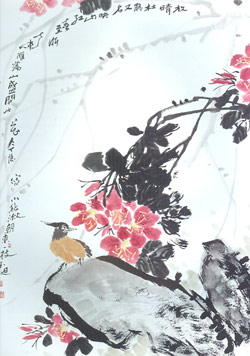
Chinese painting is famous in the world, it has a very long history
Chinese painting is an art. The painting is done using a brush on paper or silk, often with black ink alone. It is a monochromatic work of art derived, perhaps, from calligraphy. A Chinese painting is a distinctive object based on centuries-old traditions common to many things in China.
The roots of Chinese painting can be traced back to Chinese Neolithic pottery. Chinese painting was closely related to crafts like pottery as observed in the decorations used on decorative bronzes, carved jade and lacquer ware such as figures of fish, frogs, deer, birds, flowers, tree leaves and dancing people which dates back to around 6,000 to 7,000 years old. Paintings were mainly painted on silk or walls before the Tang Dynasty, and mural paintings were particularly popular. The earliest Chinese characters were pictographs.
Wednesday, October 11, 2006
Beijing Hotel Recommendation(2)
Kunlun Hotel

Jinjiang Group Management from the Kunlun Hotel located in the beautiful scenery of Liangmahe water, adjacent to the embassy district and diplomatic apartments, a large number of offices around the periphery; Airport Expressway in close proximity, drove from the hotel to the Beijing International Airport need only 25 minutes, it only takes 20 minutes to the center, the most convenient.
Hotel has more than 800 establishments (sets) specifications of the rooms are equipped with a live program can watch international satellite television, a small bar, refrigerator, safe deposit boxes. Deluxe, which is also a suite installed fax machines and other office supplies business.
There are eight luxury hotel restaurants were operating, Spanish, Japanese, Korean, Vietnamese cuisine assorted flavors; The multi-function hall which can accommodate 800 people and 11 small and medium-sized banquet room.
 Appearance |  Hall |  Rooms |
1988 renovation business in 2002
| Source : Beijing's new address on the 2nd South Zip code : 100004 |
| Distance from the airport (km) : 20 |
| Distance from the train station (km) : 8 |
| Distance from the center (km) : 10 |
| Lufthansa distance from the center (km) : 0.5 |
| Surrounding landscape : Chaoyang Park, Lufthansa Shopping Center |
Beijing Grand Hotel
Beijing Grand Hotel adjacent to the Forbidden City and Tiananmen Square in Beijing is approaching a new landmark building "Oriental Plaza." VIP buildings filled with all the furnishings of the Chinese aura layout exquisite, elegant and comfortable rooms, all of 218 sets of rosewood furniture, the mixture of classical calligraphy and painting embodied the essence of oriental culture. VIP floor environment is not only elegant, gourmet galaxy Moreover, five different style restaurants, and dishes, providing classical Western and Western buffet. The hotel also has a business center, Internet tearooms, and many other facilities and services.
 Appearance |  Hall |  Rooms |
1989 renovation business in 2003
| Address : 35 East Chang'an Street, Zip code : 100006 |
| Tel : 010-65137788 |
| Distance from the airport (km) : 22.5 |
| Distance from the train station (km) : 250 |
| Distance from the center (km) : 1 |
| Distance from the Wangfujing (km) : 0.5 |
| Surrounding landscape : Tiananmen Square, the Forbidden City and the North Sea, the Wangfujing pedestrian street, the Huangchenggen Site Park, the Great Hall of the People |
Switzerland, Hong Kong and Macao Center Hotel
Switzerland, Hong Kong and Macao Center Hotel located in the East Second Ring Road Dongsishitiao bridge southeast, close to subway stations near the Workers Stadium, Sanlitun embassy district. 17 main level, including office buildings, apartments, hotels, and it is Asia's first accessible style, with comprehensive facilities of the hotel.
A total of 454 different kinds of hotel rooms, six Western restaurants, cuisine and traditional dishes with fruit, coffee Switzerland was rated "best-star hotel restaurant." The hotel also has 10 advanced facilities, and renovation of the luxurious banquet hall and a large multi-purpose room. Fitness clubs have a high standard of fitness equipment and a comfortable environment.
The hotel business, was twice the capital of tourism, capital of the tourism industry's highest honor -- no purple Cup.
 Appearance |  Hall |  Rooms |
1991 renovation business in 2003
| Address : North Main Street, Dongcheng District, Beijing Chaoyang door on the 2nd Zip code : 100027 |
| Distance from the airport (km) : 20.5 |
| Distance from the train station (km) : 4 |
| Distance from the center (km) : 650 |
| Distance from the Beijing Workers Stadium (km) : 150 |
Beijing Asia Hotel
Asia Hotel is a five-star business hotel Sino-foreign joint venture, managed by Jinjiang International, in the vast services, foreign business travel guests. Hotels located in a busy section of the capital, near the East Second Ring Road, the proximity of the embassy district, only 30 minutes drive from the airport, 10 minutes drive from the Beijing Railway Station, 5 minutes walk up the station.
Hotel has 294 rooms, including 5,860 single rooms and 5,870 double, , Deluxe, apartment and luxury packages and other chamber, can satisfy the needs of different customers, the rooms are equipped with safes, mini-bar, small refrigerator, television rooms before CNN, CNBC, NHK1, NHK2, and the Chinese-language Beijing, and central program, which is equiped with Internet adapter. Reprovision 75 complete sets of facilities and nearly 2,700 square meters of apartment formal Xiezijian, convenient and practical design of the room is free. The hotel also has specialized banks, post offices, business centers can provide postal services, ticketing, typing, Xerox, translation and other services.
The new House meeting and recreational services, which can accommodate 500 people, set up a multi-purpose room, with simultaneous interpretation in six languages, advanced functions, and is a large international conference hosted an ideal choice, and another very different ballrooms and small guesthouses, to meet the different needs of customers. Hotel ad hoc administrative level, independent small conference rooms, reading rooms, bars, rest between, the small business center, business travel guests can meet the high standards required.
The catering and entertainment for the guests provided a colorful leisure attractions, Shanghai Jinjiang House restaurant flavor, the old dock Guangdong restaurants, in Cherry Western restaurants, all kinds of delicacies everything. Super gym and swimming pool, is the best choice for physical and mental relaxation.
 Appearance |  Hall |  Rooms |
| Address : Beijing Gongti North Road, New China on the 8th Street Zip code : 100027 |
| Distance from the airport (km) : 22 |
| Distance from the train station (km) : |
| Distance from the center (km) : 7 |
| Distance from the Beijing Workers Stadium (km) : 1 |
| Surrounding landscape : CBD merchants, bars Street |
Subscribe to:
Posts (Atom)